
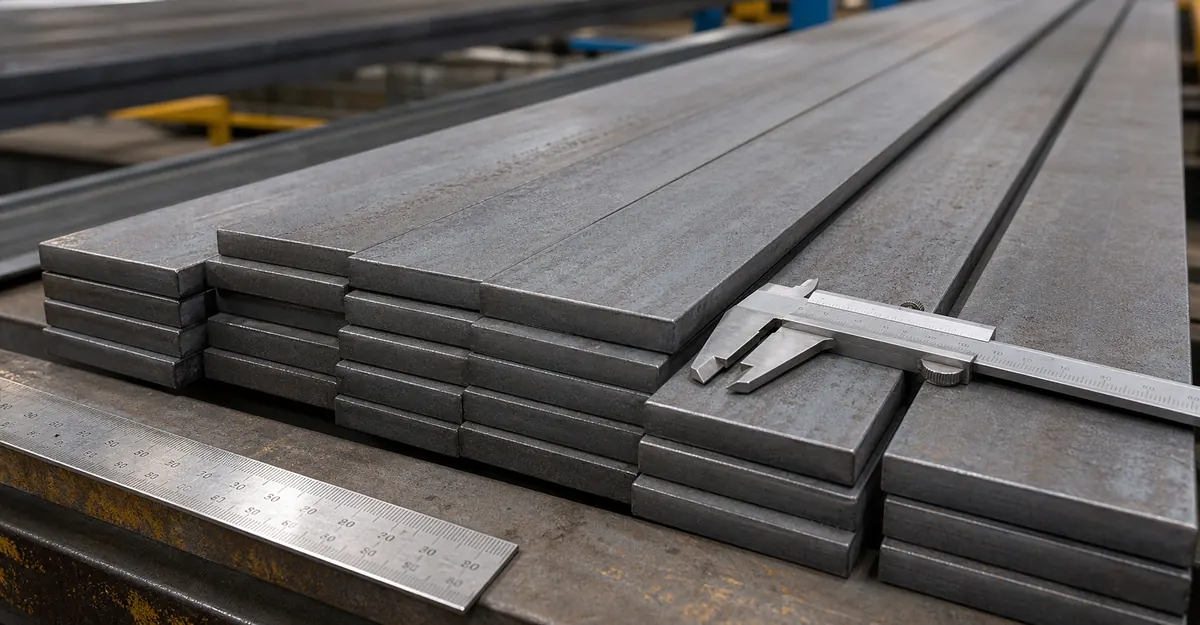
Basic Enquiry Format
A practical enquiry can read: MS Flat 50x6 mm, 6 meter length, required quantity 2 MT, delivery to Raipur, GST invoice required, test certificate if available, quote delivered rate and dispatch timeline.
For mixed sizes, list each size separately with quantity and length preference. This avoids confusion during quotation and loading.
Commercial Details to Add
Mention delivery location, unloading constraints, GST details, payment terms, rate validity expectation and whether the rate should include freight. If the order is urgent, state the required dispatch date.
If billing has to follow actual weighment, theoretical weight or piece count, confirm this before purchase order release.
Common Mistakes
Do not omit thickness. Do not mix millimeters and inches without clear conversion. Do not ask for a final delivered rate without delivery pincode or unloading point.
For project work, make sure the BOQ, supplier quote, purchase order and invoice use the same item description.
Why HSN Code Matters
HSN code supports tax classification and invoice consistency. For procurement teams, mismatch between product description, tax rate and dispatch document can delay goods receipt or accounts processing.
The buyer should not rely only on a generic name. The invoice should mention MS Flat or mild steel flat bar with relevant size and quantity details.
Documents to Check
Ask for GST invoice, e-way bill, vehicle number, loading details and weighment support. For project or government supply, also confirm test certificate or manufacturer certificate requirements before dispatch.
If the material is part of a larger BOQ, keep the supplier quote, purchase order and invoice description consistent.
Practical Buyer Note
HSN classification can depend on product form and commercial description. RLG Ispat can support buyers with proper invoice details, but tax treatment should also be reviewed by the buyer account team where needed.
For recurring orders, maintain approved item names and size codes to reduce invoice correction requests.
Standard Length vs Cut Length
MS Flat is commonly supplied in straight commercial lengths, while some orders may need cutting to project-specific sizes. Standard length supply is usually faster, while cut-length supply needs clear tolerance and quantity details.
Before ordering, mention whether the material is for stock, direct fabrication, site installation or repair work.
Estimating Wastage
Fabricators should calculate total running meters from the drawing and add cutting wastage based on the job pattern. Short repeated pieces, angled cuts and mixed sizes can increase offcut generation.
If exact cut pieces are needed, send a cutting list with size, quantity and tolerance instead of a rough verbal requirement.
Bundling and Identification
For mixed orders, size-wise bundling and tags help the receiving team identify material quickly. This is useful when flats, angles, channels and plates arrive in the same vehicle.
Good bundling reduces sorting time, prevents wrong-size usage and supports cleaner stock records.
At a glance: what to check
Each row covers one part of this topic, what it involves, the points to confirm and a practical tip.
| Topic | What it covers | Confirm | Tip |
|---|---|---|---|
| How to Order MS Flat in Cut Lengths | cut-length orders, tolerance, piece count and dispatch bundling | cutting list, wastage, edge finish and size marking | A written cutting list is better than verbal instructions for cut-length supply. |
| E-Way Bill and Dispatch Document Checklist | e-way bill, invoice, vehicle details, weighment and delivery records | invoice value, GST details, vehicle number and delivery state | Keep GST and delivery details ready before the vehicle is planned. |
Notes by buyer type
Different buyers care about different parts of the same order. The table lists what each type of buyer should confirm.
| Buyer | Situation | Focus on | Tip |
|---|---|---|---|
| Buying Guide for Small Fabricators | small workshops handling gates, grills, repair work, brackets and general fabrication | availability, minimum quantity, billing unit and local delivery | Small fabricators should keep repeat sizes in stock and order uncommon sizes only when drawings require them. |
| Buying Guide for Contractors | contractor procurement for site fabrication, supports, temporary works and project details | BOQ matching, documents, delivery schedule and site unloading | Contractors should align the supplier quote with BOQ item descriptions and site delivery needs. |
| Procurement Guide for Purchase Managers | purchase teams comparing quotations, documents, rate validity and supplier readiness | grade, GST, freight, payment terms and certificate support | Purchase managers should compare quotes on the same size, grade, delivery and documentation basis. |
| Supply Planning for Project Sites | project site delivery, size-wise bundling, documentation and unloading planning | site access, delivery timing, material tagging and weighment records | Project buyers should communicate unloading constraints and site contact details before dispatch. |
Related guides
FAQs
What is the minimum information for an MS Flat quote?
Width, thickness, length, quantity, delivery location and grade if specified.
Should I mention rate basis?
Yes. Ask whether the quote is per kg, per metric ton or per piece so comparison is clear.
Can I send a mixed-size BOQ?
Yes. Send a size-wise schedule with quantity and any cutting or documentation requirement.
Should HSN be checked before order confirmation?
Yes, especially for registered business buyers who need accurate GST input records.
What should the item line mention?
It should mention MS Flat or mild steel flat bar along with size, quantity and commercial unit.
Is e-way bill needed?
E-way bill requirement depends on invoice value and movement rules, so it should be checked for each dispatch.
Can MS Flat be ordered in cut lengths?
Cut-length supply may be possible depending on size, quantity, tolerance and supplier arrangement.
Why should wastage be included?
Cutting loss and offcuts can reduce usable length, so realistic wastage avoids shortage during fabrication.