Common Site Uses
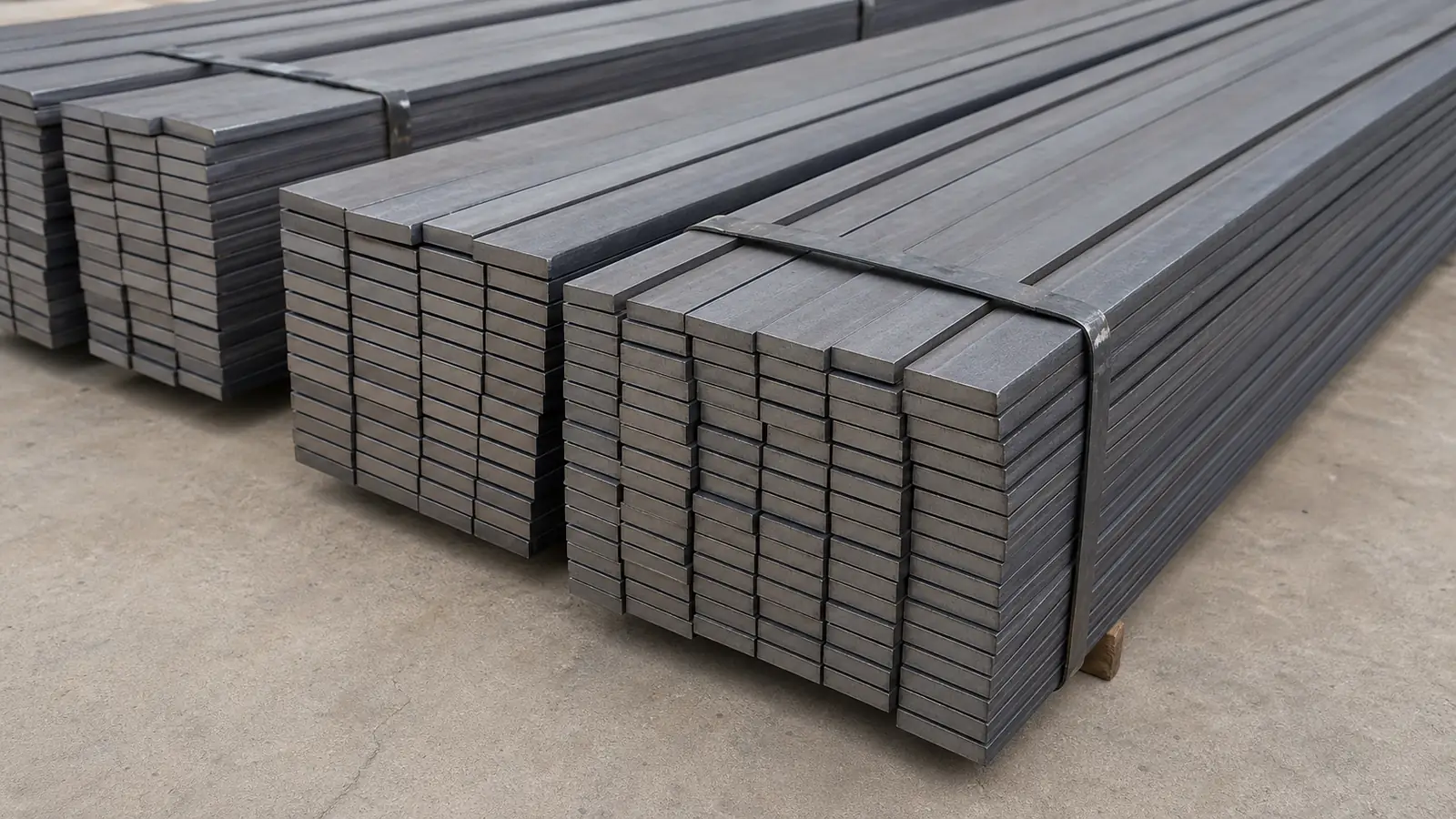
MS Flat is used in support frames, clamps, brackets, stiffeners, ladders, guard details, temporary fixtures and repair work. It is also used with angles, channels and plates in mixed steel assemblies.
For non-critical work, availability and practicality often drive selection. For permanent or load-bearing work, drawings should control the size.
Site Buying Checklist
Share BOQ reference, size, quantity, delivery location, unloading constraints and dispatch priority. Ask for GST invoice, e-way bill and weighment records.
If material has to match an approved vendor list or test certificate requirement, clarify before ordering.
Storage and Handling
Store flats above ground level where possible and avoid mixing sizes without tags. Proper stacking reduces bending, confusion and rework during installation.
For large sites, size-wise bundling and marking can save significant time.
Typical Applications
MS Flat is used in residential gates, shop shutters support work, window grills, compound grills, staircase railings and decorative fabrication. Smaller flats are common in pattern work, while thicker flats are used for strength.
It pairs well with MS angles, square pipes and round bars depending on the final design.
Finish Considerations
For visible work, ask for material with acceptable surface condition. Rust, scale and handling marks can be managed, but they add preparation time before primer and paint.
If the gate is exposed to weather, finishing quality and coating maintenance matter as much as steel size.
Ordering Advice
Gate fabricators should estimate running meters from the design and add reasonable cutting wastage. If multiple houses or project units are involved, consolidate size-wise demand before purchase.
Confirm delivery access because long steel lengths can be difficult to unload in narrow residential lanes.
Common Railing Uses
MS Flat can be used as vertical strips, horizontal members, side supports, brackets, decorative patterns and fixing details. It is often combined with square pipes, round bars, angles or channels.
For staircase and balcony work, the design should balance appearance, stiffness, safety and maintenance.
Finish and Coating
Because railing work is visible, surface preparation is important. Rust, scale and welding marks should be addressed before primer, paint or powder coating.
Outdoor railings need a coating plan suitable for weather exposure. Storage before fabrication should also avoid unnecessary moisture contact.
Buying Checklist
Share the size, approximate running meters, number of pieces, delivery city and whether material should be standard length or cut length. If the design uses multiple sizes, send a size-wise schedule.
For project railings, confirm whether engineering approval or client-approved material specifications are required.
Why MS Flats for Earthing?
MS Flats provide a large surface area for electrical contact with the soil, which helps lower the overall earth resistance of the grid. Their flat profile makes them easy to lay in trenches, bend around foundations, and bolt or weld to earth electrodes and equipment panels.
While copper is a better conductor, MS Flats are significantly cheaper and less prone to theft, making them the standard choice for large-scale industrial earth mats and substation grounding.
The Role of Galvanization
Bare MS Flats will rapidly corrode when buried in soil, increasing electrical resistance and eventually failing. Therefore, earthing flats must be Hot-Dip Galvanized (HDG) in accordance with IS 4759 or IS 2629.
The zinc coating acts as a sacrificial anode, protecting the steel core from soil moisture, salts, and stray currents. A typical galvanizing coating thickness of 80 to 100 microns can provide decades of subterranean protection.
Standard Sizes for Grounding
The size of the MS Flat is determined by the fault current calculation for the specific installation.
- Light Residential/Commercial: 25x3 mm or 25x6 mm flats are common for equipment earthing. - Industrial & Substation Mats: 50x6 mm, 65x8 mm, or 75x10 mm flats are required to handle massive fault currents safely. - Lightning Protection: 25x3 mm or 25x6 mm flats are typically run down the building facade.
Installation and Jointing
For a reliable earthing grid, the connections between MS Flats and earth pits must be electrically continuous and mechanically robust.
Joints in the earth mat are typically achieved via exothermic welding or heavy-duty bolting (using galvanized hardware). Welded joints must be cleaned and coated with zinc-rich paint (cold galvanizing compound) to prevent localized rust.
Use-by-use guide: where MS flat goes and what to check
Each row summarises one application: where the flat is typically used, the checks that matter most and a buying note. Share the drawing or size-wise schedule with your enquiry so the supplier can match size, grade and dispatch.
| Application | Typical use | Key checks | Buying note |
|---|---|---|---|
| Solar Mounting Structures | solar mounting frames, bracket supports and small fabrication details around solar parks and rooftop installations | corrosion exposure, coating compatibility, hole layout and project documentation | Mention whether the flats are for rooftop frames, ground-mounted structures, brackets or maintenance work so the supplier can align size and dispatch planning. |
| Industrial Shed Fabrication | industrial shed supports, bracing, door frames, edge members and miscellaneous welded details | span, welding access, straightness and compatibility with angles, channels and plates | Share the shed drawing or size-wise schedule so flats can be bundled with related steel sections. |
| Warehouse Racks and Storage Supports | warehouse racks, shelf supports, reinforcement strips and storage fabrication | load expectation, hole spacing, bending risk and surface finish | For rack work, confirm whether the flat is a primary support, stiffener, spacer or fixing strip before choosing size. |
| Base Supports and Packing Plates | base supports, packing strips, leveling details and small foundation-related fabrication | flatness, thickness, cutting tolerance and surface contact | Confirm whether the flat is used for temporary packing, permanent support or machine alignment. |
| Boundary Walls and Compound Grills | compound grills, boundary supports, vertical strips and security fabrication | outdoor exposure, coating, span and design pattern | Outdoor grill work should include primer, paint or coating planning from the beginning. |
| Shutters and Rolling Door Supports | shop shutters, rolling door supports, guides and repair details | straightness, edge condition, thickness and fitting accuracy | Mention whether material is for new shutter fabrication or repair work. |
| Ladders and Access Platforms | industrial ladders, small platforms, access frames and maintenance supports | safety, load, grip, weld detail and corrosion exposure | Safety-related fabrication should follow approved drawings and site standards. |
| Platforms and Walkway Details | platform edges, kick plates, supports, access frames and walkway fabrication | load, edge protection, welding and site environment | Confirm whether the flat is a structural detail, edge guard or miscellaneous support. |
| Security Grills and Window Protection | window grills, security partitions, shop protection and residential fabrication | bar spacing, finish, coating and design pattern | For visible grills, ask for acceptable surface condition and straightness. |
| Decorative Steel Fabrication | decorative gates, panels, screens, railings and architectural steelwork | surface quality, clean edges, bending suitability and coating | Decorative work should not be bought only on lowest rate because finishing effort can change total cost. |
| Shopfronts and Commercial Fabrication | shopfront frames, shutters, signage supports and retail fabrication | visible finish, straightness, coating and installation constraints | Commercial fabricators should estimate running meters and cutting waste from the design. |
| Door Frames and Fabricated Openings | door frames, industrial openings, supports and edge trims | straightness, visible finish, weld detail and installation tolerance | Door-frame fabrication benefits from accurate cut-length planning and size-wise marking. |
| Signage Frames and Display Supports | signboard frames, display structures, brackets and mounting strips | wind exposure, finish, hole placement and coating | Outdoor signage should consider wind load and corrosion exposure before size selection. |
| PEB and Pre-Engineered Building Details | PEB trims, supports, brackets, bracing details and miscellaneous fabrication | drawing approval, hole layout, coating and dispatch bundling | PEB buyers should send size-wise schedules linked to drawing references. |
| Metal Furniture Frames | metal furniture, table frames, shelving, display racks and decorative supports | surface finish, straightness, cutting accuracy and paint preparation | Visible furniture work needs cleaner material handling and better surface preparation. |
| Cable Tray Supports | cable tray brackets, hangers, support strips and service frames | load, fixing points, corrosion exposure and installation access | Mention indoor or outdoor use because coating and storage expectations can change. |
| Pipe Supports and Utility Frames | pipe brackets, utility supports, hangers and small service frames | load, corrosion exposure, hole layout and site access | Mention whether pipe support work is indoor, outdoor or plant-area installation. |
| Brackets and Mounting Supports | wall brackets, equipment brackets, panel supports and small mounting plates | hole diameter, edge distance, thickness and cut length | Send hole layout or drawing if drilling and alignment are important. |
| Stiffeners in Steel Fabrication | stiffener strips, reinforcement members and welded strengthening details | load path, weld size, thickness and placement | Do not substitute stiffener size without checking the drawing or engineer-approved detail. |
| Clamps and Holding Strips | clamps, holding strips, straps, brackets and fixing details | bendability, hole layout, thickness and finish | If bending is required, discuss size and bend radius expectations before ordering. |
Related guides
FAQs
Can MS Flat be used structurally?
It can be used in structural details only when approved by design or project engineering teams.
What documents are needed for site supply?
GST invoice, e-way bill, weighment support and test certificate where specified.
How should MS Flat be stored?
Keep it stacked safely, size-wise, and protected from prolonged water exposure.
Which MS Flat size is used for gates?
It depends on design, but 25x5, 30x5, 40x5 and 50x6 mm are commonly considered for different gate parts.
Can MS Flat be painted?
Yes. Clean the surface, apply primer and use suitable paint or coating for the environment.
Which MS Flat size is used for railings?
It depends on design and load, but buyers commonly consider sizes in the 25 mm to 50 mm width range for many railing details.
Can MS Flat be powder coated?
Yes, but surface preparation and coating process quality are important for final finish.
What is the difference between MS Flat and GI Flat for earthing?
GI (Galvanized Iron) Flat is simply an MS Flat that has been coated with zinc to prevent rust. Bare MS Flats should never be used for underground earthing.