
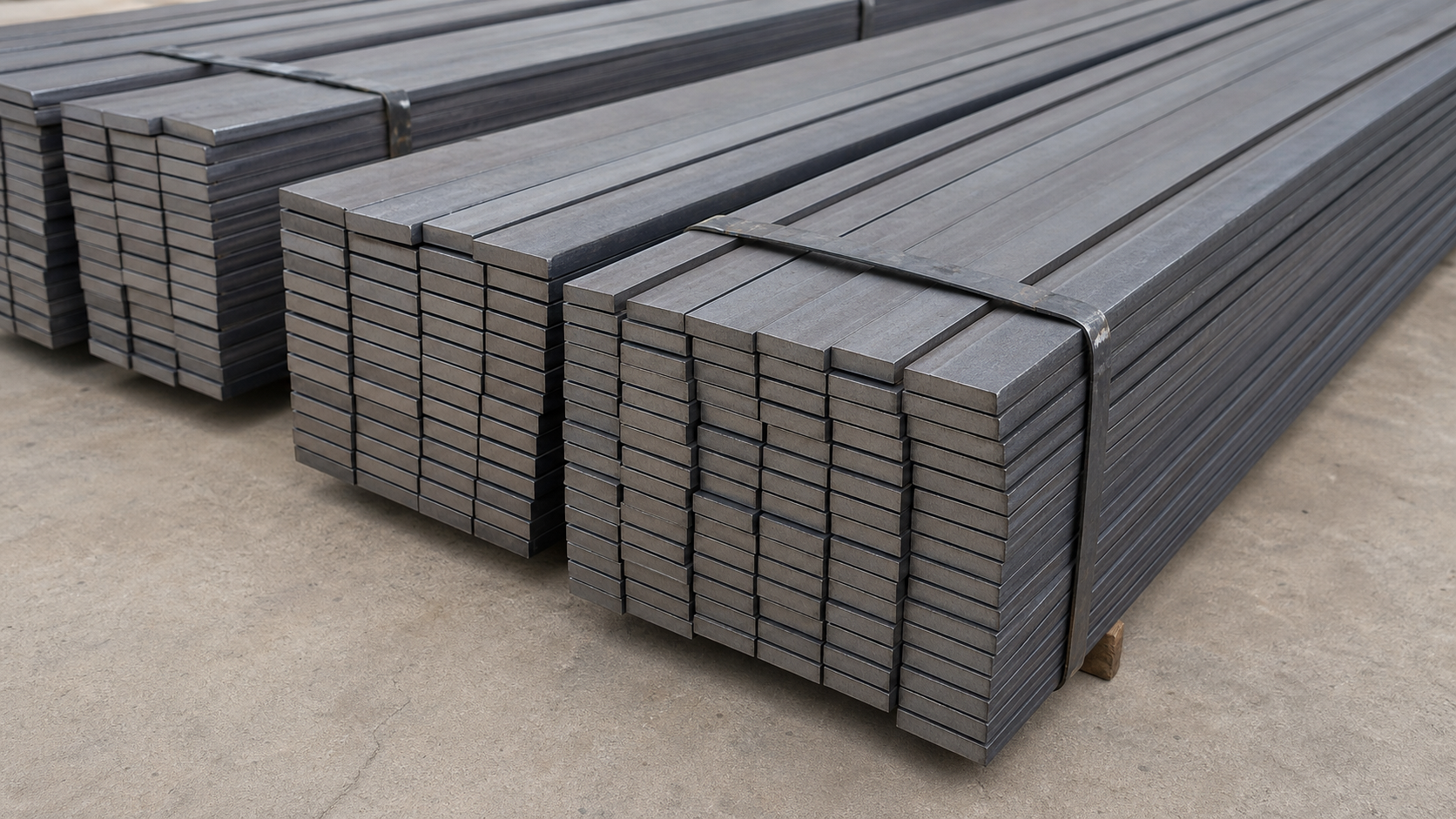
Common Site Uses
MS Flat is used in support frames, clamps, brackets, stiffeners, ladders, guard details, temporary fixtures and repair work. It is also used with angles, channels and plates in mixed steel assemblies.
For non-critical work, availability and practicality often drive selection. For permanent or load-bearing work, drawings should control the size.
Site Buying Checklist
Share BOQ reference, size, quantity, delivery location, unloading constraints and dispatch priority. Ask for GST invoice, e-way bill and weighment records.
If material has to match an approved vendor list or test certificate requirement, clarify before ordering.
Storage and Handling
Store flats above ground level where possible and avoid mixing sizes without tags. Proper stacking reduces bending, confusion and rework during installation.
For large sites, size-wise bundling and marking can save significant time.
Who Should Read This Use Case Guide
MS Flat for Construction: Site Uses and Procurement Checks is written for buyers who need a practical steel-purchase answer, not a short definition. The typical reader may be a fabricator preparing a quote, a contractor checking a BOQ, a purchase manager comparing suppliers, a maintenance engineer planning shutdown material or a site team trying to avoid wrong-size delivery.
MS Flat is a simple product, but the buying decision still needs care. Width, thickness, length, grade, quantity, surface condition, billing basis, freight, documents and delivery timing can all change the final landed cost and usefulness of the material.
Specification Checklist Before Ordering
Before ordering for MS Flat for Construction: Site Uses and Procurement Checks, write the requirement size-wise. Mention the width in mm, thickness in mm, preferred length, total quantity, grade if specified, delivery city, GST invoice requirement and whether the material should be quoted per kg, per metric ton or per piece.
If the material is linked to a drawing, fabrication schedule or client-approved BOQ, do not rely on a verbal description. Share the written schedule and keep the item description consistent across enquiry, quotation, purchase order, invoice and stores entry. This reduces disputes during receiving and fabrication.
Weight, Rate and Landed Cost Planning
Approximate MS Flat weight per meter can be estimated as width in mm x thickness in mm x 0.00785. This formula helps buyers convert running meters or pieces into expected tonnage before asking for a final quotation.
For MS Flat for Construction: Site Uses and Procurement Checks, compare landed cost instead of only the basic steel rate. Freight, GST, loading, unloading, cutting, delivery urgency, stock availability, documentation and payment terms can affect the actual purchase value. A lower base rate is not always better if the final delivered cost or service reliability is weaker.
Quality Checks and Acceptance Points
On receipt, check whether the supplied MS Flat matches the ordered size, length, quantity and agreed billing basis. Also inspect straightness, surface condition, bundling and markings before the material is cut or issued to fabrication.
Light mill scale can be normal for many mild steel products, but heavy corrosion, mixed sizes, wrong thickness or badly bent material can create avoidable cost. For visible work such as railings, gates, grills and architectural fabrication, surface preparation and straightness deserve extra attention.
Documentation and Commercial Clarity
For business purchases connected to MS Flat for Construction: Site Uses and Procurement Checks, ask for a GST invoice, e-way bill where applicable, vehicle details, weighment support and test certificate support if the project requires it. These points should be discussed before dispatch rather than after the vehicle reaches the site.
Commercial clarity matters as much as material clarity. Confirm rate validity, tax treatment, freight inclusion, loading terms, unloading responsibility, credit terms and expected dispatch date. When all terms are written clearly, accounts, stores and site teams can process the material faster.
Common Mistakes to Avoid
A common mistake is asking only for "MS Flat rate" without size, thickness, quantity or delivery location. Another is comparing quotes where one supplier includes freight and GST while another quotes only a basic ex-warehouse rate.
For MS Flat for Construction: Site Uses and Procurement Checks, avoid changing sizes casually after the quote is finalized. Even a small thickness change can alter weight, cost, strength, welding behavior and stock availability. If substitution is needed, confirm it with the drawing owner, fabrication team or responsible engineer before placing the order.
How to Get a Faster and Cleaner Quote
The fastest way to get a useful MS Flat quote is to send a complete requirement in one message: size, length, quantity, grade, delivery pincode, required date, billing basis, document needs and whether the order is urgent or planned.
For MS Flat for Construction: Site Uses and Procurement Checks, attach photos, drawings, previous purchase descriptions or BOQ lines when available. This helps the supplier understand whether the flat is for fabrication, construction, maintenance, support work, visible finish or repeat production stock.
Practical Purchase Example
A practical enquiry for MS Flat for Construction: Site Uses and Procurement Checks can be written as: MS Flat 50x6 mm, standard 6 meter length, required quantity 2 MT, delivery to project site, GST invoice and e-way bill required, quote delivered rate with dispatch timeline. If the project needs multiple sizes, each size should be listed on a separate line.
This format gives the supplier enough information to check stock, estimate weight, discuss freight, confirm documents and respond with a useful commercial offer. It also gives the buyer a clean record for internal approval, accounts processing and receiving inspection.
When the enquiry is complete at the start, the buyer spends less time on repeated clarification calls and gets a quote that is easier to compare with competing offers.
FAQs
Can MS Flat be used structurally?
It can be used in structural details only when approved by design or project engineering teams.
What documents are needed for site supply?
GST invoice, e-way bill, weighment support and test certificate where specified.
How should MS Flat be stored?
Keep it stacked safely, size-wise, and protected from prolonged water exposure.
What is the most important detail for MS Flat for Construction: Site Uses and Procurement Checks?
The most important details are width, thickness, length, quantity, grade if specified, delivery location, billing basis and documentation requirement.
How can buyers avoid wrong MS Flat supply for MS Flat for Construction: Site Uses and Procurement Checks?
Send a written size-wise schedule, confirm the quote basis, check documents before dispatch and verify the material against the purchase order before cutting or fabrication.
Should MS Flat be compared only by rate?
No. Buyers should compare size, grade, weight basis, GST, freight, loading, delivery timeline, documentation support, stock availability and supplier reliability.
When should test certificate support be requested?
Request test certificate or grade documentation before quotation when the project, client, consultant or internal quality team requires it.
What is a good enquiry format for MS Flat for Construction: Site Uses and Procurement Checks?
A good enquiry lists size, length, quantity, grade if required, delivery pincode, GST and document needs, rate basis, required dispatch date and site contact details.
