The Importance of Supply Chain Reliability
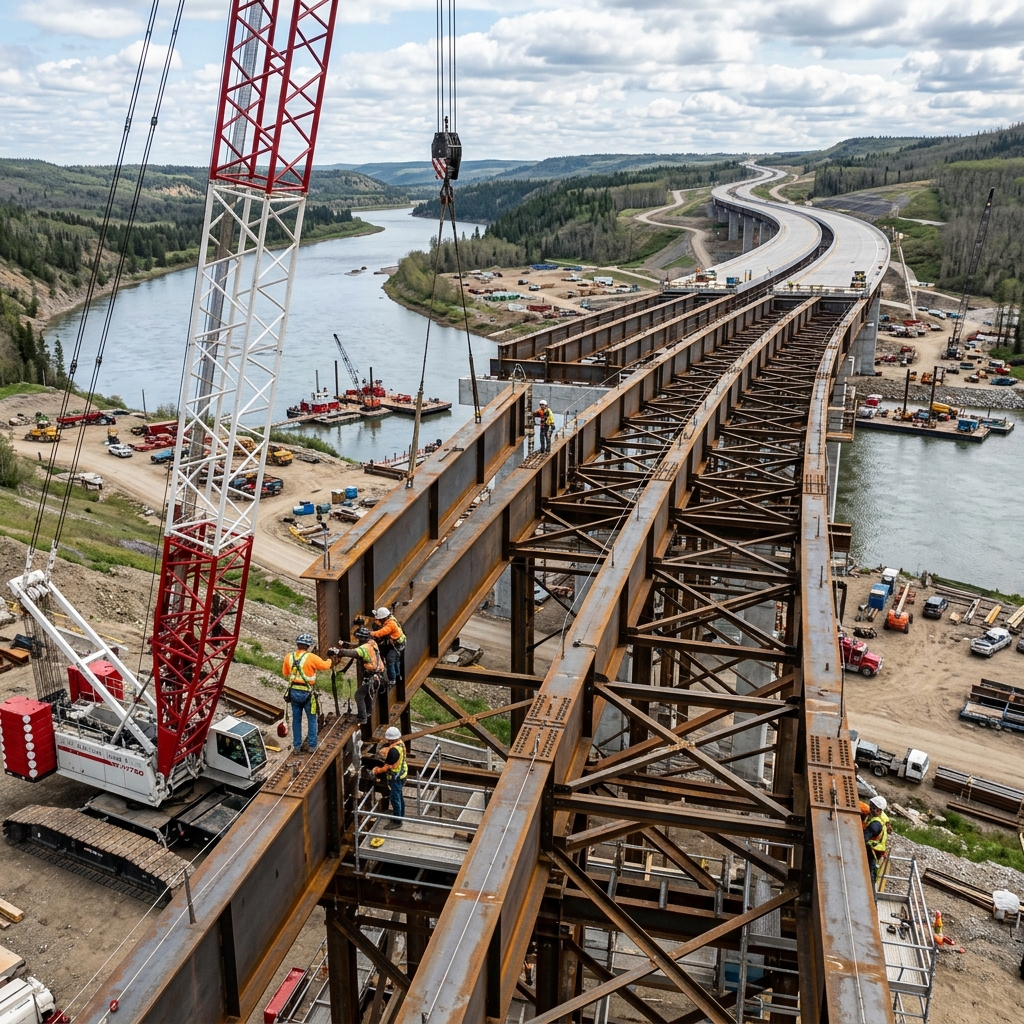
In large infrastructure projects like highway bridges, metro stations, or heavy industrial sheds, structural steel is often the critical path item. Any delay in the supply of primary load-bearing members like MS Beams, heavy Plates, or HT Sections can stall fabrication and cause cascading delays across the entire project schedule.
A reliable procurement strategy does not simply look for the lowest per-ton rate. It prioritizes delivery certainty, dimensional consistency, and flawless documentation. B2B buyers must qualify suppliers based on their ability to source specific grades (like IS 2062 E350) and manage mixed-load dispatches efficiently.
Phased Procurement and Site Readiness
Steel procurement should mirror the engineering sequence. Heavy sections (columns and main beams) should arrive first, followed by secondary supports (purlins and channels), and finally roofing and cladding. Ordering all material at once might seem cost-effective on paper, but it often leads to severe site congestion, double-handling, and material degradation.
Before triggering a bulk dispatch, procurement managers must confirm that the site has the necessary unloading equipment, sufficient hardstand area for storage, and the readiness to inspect material upon arrival.
Navigating Rolling Schedules and Stock Availability
Not all structural sections are rolled continuously. Mills typically operate on rolling campaigns, meaning specific sizes of beams or angles might only be produced once a month. Buyers ordering non-standard sizes or heavy sections must account for these rolling cycles.
Partnering with a supplier like RLG Ispat, who maintains deep stockyard inventory and strong mill relationships across Central India, allows buyers to bridge the gap between sudden site requirements and rigid mill schedules.
Quality Assurance and Documentation
For infrastructure projects subject to third-party inspection (TPI) or strict consultant oversight, material without proper documentation is essentially useless. Mill Test Certificates (MTCs) must be requested at the enquiry stage, not after the material has been delivered.
Upon receipt, the site quality team should immediately correlate the heat numbers on the material tags with the physical MTCs. Any discrepancies must be raised before the material is cut or welded.
Controlling Delivered Costs
The true cost of steel is the landed cost at the site, which includes the basic rate, GST, freight, loading/unloading charges, and transit insurance. When comparing quotes, buyers must ensure they are comparing apples to apples.
Furthermore, ordering standard lengths (e.g., 12 meters) might seem cheaper, but if the design requires 10-meter lengths, the 2 meters of offcut represent a 16% material waste. Negotiating custom-cut lengths for bulk orders can significantly reduce total project costs.
FAQs
How far in advance should bulk structural steel be ordered?
Standard sizes can often be dispatched within days, but non-standard sections or high-tensile grades should be ordered 4-6 weeks in advance to align with mill rolling schedules.
Why is it important to request MTCs during the enquiry phase?
Ensuring MTC availability upfront guarantees that the supplier sources the material from approved, document-compliant mills, preventing site rejection later.
Can RLG Ispat manage phased deliveries?
Yes, RLG Ispat specializes in coordinating phased deliveries aligned with your project schedule, reducing site congestion and optimizing cash flow.
